Lottery Draw Machines
6-Chamber Lottery Ball Machine with Display Cabinet
- Six independent transparent drums run one combined draw, each releasing its own numbered ball
- Every winning ball stays on show in its own front display window after the draw
- Blue-lit drum bases and an illuminated plinth keep results readable across the hall
- Horizontal long white cabinet doubles as a display counter for showrooms and studios
- One large numbered ball per window — audiences read all six digits at a glance
- Metallic release heads and visible guide paths make every step of the draw auditable
- Caster-mounted cabinet moves between studio, stage and storage without lifting
Gallery-Led Walkthrough
Inside the 6-Chamber Lottery Ball Machine with Display Cabinet
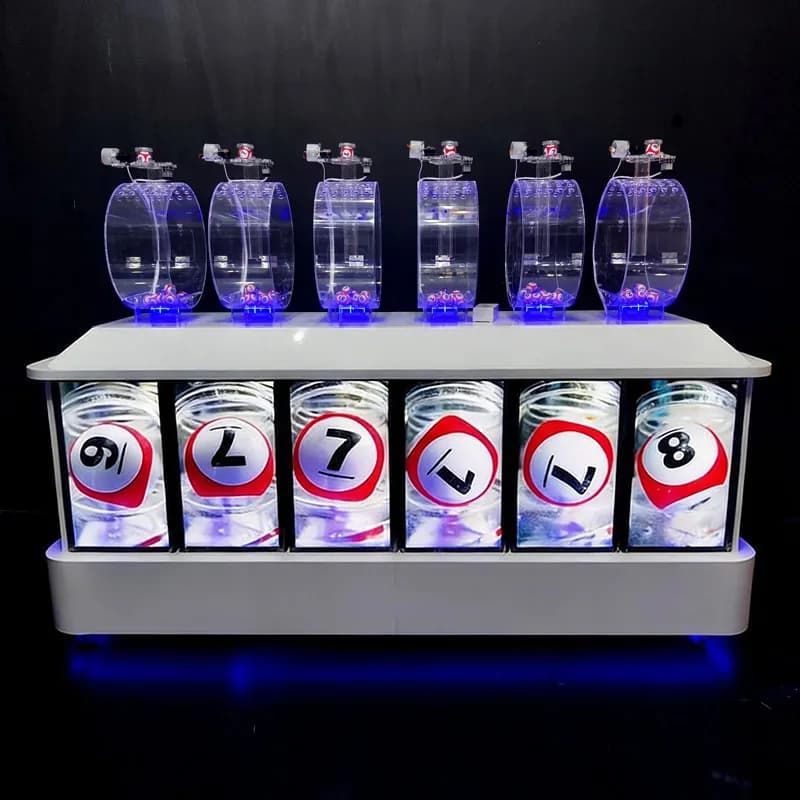
The 6-Chamber Lottery Ball Machine with Display Cabinet is a horizontal white cabinet that combines six transparent mixing drums on top with six front display windows, each window holding one large numbered result ball. It is built for lottery operators, draw studios and showrooms that run six-digit or six-position draws and want every winning ball to remain on display in its own illuminated window after release.
What makes this 6 chamber lottery ball machine different from a single-drum unit?
A single-drum machine draws several balls from one shared chamber. This six-cylinder lottery machine does the opposite: each digit position gets its own transparent cylindrical drum, its own blue-lit base and its own metallic release head, and the released ball drops into a dedicated front window directly below its drum. The result is a draw that audiences can follow position by position — six drums mixing in parallel, six balls released in sequence, six windows filling up left to right. For operators running televised draws, stage events or showroom demonstrations, this layout turns the machine itself into the scoreboard: once the draw ends, the full six-ball result stays visible behind the front glass for as long as you want it there. The long white cabinet reads as furniture rather than equipment, so it fits naturally into lobbies, studios and exhibition floors where a bare mechanical rig would look out of place.
What do the real photos of this six-chamber cabinet actually show?
Gallery images do the talking on this page, so here is exactly what you are looking at. The front view shows a long, low white cabinet with six equally spaced transparent windows across its face. Inside each window sits one large result ball printed with a bold digit — in the photographed unit you can read 6, 7, 2, 7, 7, 8 — with each number framed by a red-and-white graphic so it reads clearly from a distance. Above the cabinet top, six transparent cylindrical drums stand in a row; colored mixing balls are visible at the bottom of each drum, each drum base glows blue, and a metallic release mechanism caps the top of every cylinder. Under the cabinet runs a blue illuminated plinth that lifts the whole unit visually off the floor. Factory photos show companion cabinets of the same series standing on caster wheels, with transparent ball guide tubes and display stands alongside, so the machine can be repositioned without lifting equipment. Packing photos show export wooden crates stenciled with fragile-glass and this-way-up marks, stacked and loaded at the dock.
How does the six-chamber draw work in practice?
Each of the six drums holds its own set of small colored mixing balls. During a draw, the drums mix simultaneously so every position is randomized independently — there is no shared chamber where one ball can crowd another out. When the draw is called, the metallic release head on top of each drum lets one ball through, and the ball travels down to the transparent window beneath its drum, where it settles as the displayed result for that position. Because drum, release path and window are all transparent, witnesses can watch a ball leave its drum and arrive in its window with nothing hidden inside the cabinet. The windows then hold the six result balls on display — useful for draw studios that keep results on camera after the event, and for venues that want the last winning combination visible to walk-in visitors until the next draw resets the machine.
Where does a six-window lottery ball display cabinet fit best?
This format is designed for venues where the draw is a public event and the result needs to linger on view. Lottery and bingo operators use it for six-position draws in dedicated draw studios, where the camera framing benefits from a clean white cabinet and backlit drums. Shopping malls and family entertainment centers place it on stage for scheduled raffle events — the illuminated plinth and blue drum lighting carry well under stage lights, and the front windows let the crowd verify the result without approaching the machine. Showrooms and exhibition booths use it as a demonstration unit: the cabinet works as a counter, the drums attract attention, and the displayed balls invite questions. Cinema lobbies and amusement venues run it for ticket draws and membership events where a visible, mechanical draw feels more credible than a screen animation. In every case the draw stays entertainment — numbered balls, windows, and an audience watching luck happen.
What can you customize on this 6-cylinder display cabinet?
The photographed unit is the standard six-chamber layout, but the cabinet is built to order. Cabinet dimensions can be adjusted to your floor plan or stage width, and the white finish can be changed to match your brand palette or venue interior. Ball sets are configured to your game — numbering range, digit style and ball colors follow your draw format rather than a fixed scheme. Branding panels, logo graphics and front-face artwork can be applied to the cabinet body. If your operation runs fewer or more positions, chamber count and window count are configured at the build stage, since drum, release head and window are manufactured as matched sets. Packaging follows your shipping route: export wooden crates with fragile and this-way-up handling marks are standard, with inner protection sized to the drum and window assembly. Share your draw format and venue dimensions with the Jisun team and we will confirm the build sheet before production starts.
How is this 6-chamber machine with display cabinet packed, shipped and supported?
Each unit ships in an export wooden crate, stenciled with fragile-glass and this-way-up handling marks, with the transparent drums and window assembly protected inside. Jisun handles design, development, production and sales in-house from Guangzhou — we have built lottery machines, bingo machines and related draw equipment since 2005, and every machine passes through a dedicated testing room before it reaches the packing line. Production, testing, packing and showroom facilities sit on one site, so sample inspection, factory tours and video verification of your specific unit are easy to arrange before dispatch. Standard terms are EXW, FOB Guangzhou, CFR or CIF, with a 12-month warranty on the machine. Spare ball sets, release-head components and lighting parts are available from the same line that built your machine. To get pricing for your configuration, send us a quote request with your chamber count, ball format and destination port.
Six Chambers, Six Windows
6-Chamber Display Cabinet Specifications
- Base
- Blue illuminated plinth under the cabinet
- Balls
- Small colored mixing balls plus large numbered result balls with red-and-white graphics
- Origin
- Guangzhou, China
- Cabinet
- Horizontal long white display cabinet
- Mobility
- Caster wheels under the cabinet
- Packaging
- Export wooden crate with fragile and this-way-up handling marks
- Ball Release
- Metallic release mechanism on top of each drum
- Machine Type
- Multi-cylinder pick-N lottery ball machine with display cabinet
- Customization
- Cabinet size and finish customizable to your venue layout
- Drum Lighting
- Blue light at the base of each mixing drum
- Display Windows
- 6 front transparent windows, one large numbered result ball per window
- Mixing Chambers
- 6 independent transparent cylindrical drums
Where This Six-Window Draw Cabinet Works Best
Custom Options for the 6-Cylinder Display Cabinet
- Cabinet dimensions adjusted to your stage width or venue floor plan
- Cabinet finish and color changed from standard white to your brand palette
- Chamber and display window count configured at build stage for your draw format
- Ball numbering range, digit style and ball colors matched to your game rules
- Front-face branding panels, logo graphics and cabinet artwork
- Export packaging in wooden crate or carton per your shipping route
Buyer Questions
FAQ: Six-Drum Lottery Machine with Display Windows
- How many balls does this 6 chamber lottery ball machine draw at once?
- Six. Each of the six transparent drums holds its own set of small mixing balls and releases exactly one ball per draw. The six released balls drop into the six front display windows, one per window, giving you a six-position result in a single draw cycle. If your game format needs fewer or more positions, the chamber and window count is configured when the machine is built, since each drum, release head and window is manufactured as a matched set.
- Does each winning ball really stay visible after the draw?
- Yes. The front of the white cabinet carries six transparent windows, and each released ball settles into the window directly below its drum. The balls remain on display there until the next draw resets the machine, which is why operators use this model in draw studios and showrooms — the full six-ball result stays readable to cameras and walk-in visitors for as long as you need it. The balls are large format with bold digits and red-and-white number graphics for long-distance readability.
- Can the cabinet size and appearance be customized for our venue?
- Yes. The machine is built to order, so cabinet dimensions can be adjusted to your stage width or floor plan, and the standard white finish can be changed to your brand colors. Front-face branding, logo graphics, ball numbering range and ball colors all follow your draw format. Because each drum and window is a matched set, changes to chamber count are also made at the build stage. Share your venue dimensions and game rules with us and we confirm a build sheet before production.
- What is the minimum order and how long does production take?
- The minimum order is one unit, and sample orders are accepted — many buyers start with a single machine for studio testing or showroom demonstration before a multi-unit rollout. Standard lead time is about 25 days after the build sheet and deposit are confirmed, covering production, testing-room verification and export crating. Larger orders or heavily customized cabinets may add time, which we confirm in writing on the proforma invoice before you commit.
- How is the machine packed for export shipping?
- Each unit is packed in an export wooden crate stenciled with fragile-glass and this-way-up handling marks, with the transparent drums and window assembly braced and protected inside. Every machine passes through our in-house testing room before packing. Shipping terms are EXW, FOB Guangzhou, CFR or CIF depending on your forwarder arrangement. The machine carries a 12-month warranty, and spare ball sets, release-head parts and lighting components are available from our production line after delivery.
Crating, Delivery and Warranty for the Six-Chamber Cabinet
The figures below follow common B2B export practice for arcade and amusement equipment. Final MOQ, schedule, freight term, and warranty coverage are confirmed in the quotation or proforma invoice for your order.
| Term | This Model | Notes |
|---|---|---|
| MOQ | 1 unit (sample order accepted) | Confirmed for this product. |
| Production Lead Time | 25 days | Estimated production time after order confirmation. |
| Shipping | EXW / FOB Guangzhou / CFR / CIF | Available trade term for this product. |
| Warranty | 12 months | Product warranty period confirmed for this model. |
Amusement-only, no cash payout. Local compliance required; operator is responsible for local regulations.