3D-V2 Three-Cylinder Pick 3 Lottery Machine Operation Video
Watch the 3D-V2 three-cylinder Pick 3 lottery machine in action as it air-mixes the balls, draws one numbered ball per chamber and shows the winning numbers on its built-in LCD screens.
Lottery Draw Machines
3D-V2 Three-Cylinder Pick 3 Lottery Machine with Screens
Model: 3D-V2
- Three independent spherical mixing cylinders draw each Pick 3 digit separately
- Three vertical front screens show each drawn digit as it is released
- External audience display mirrors the full 3-digit result, e.g. 4-2-6
- Cylinders can draw individually or simultaneously to match your game pace
- Microprocessor controls mixing time and the interval between selections
- Solid 4 cm numbered balls in red, yellow and blue for clear visibility
- RFID, data push and API integration available on request
3D-V2 Technical Data
Three-Cylinder Pick 3 Machine Structure and Control Specs
Custom Options for the 3D-V2 Pick 3 Machine with Screens
- Machine configuration matched to your Pick 3 game rules on request
- RFID function integration
- Data push output for external systems
- API function for connection to your management software
- Custom logo design applied to the cabinet
- Cabinet dimensions custom-built to venue requirements
Engineering Breakdown
Inside the 3D-V2 Three-Cylinder Pick 3 Lottery Machine with Screens
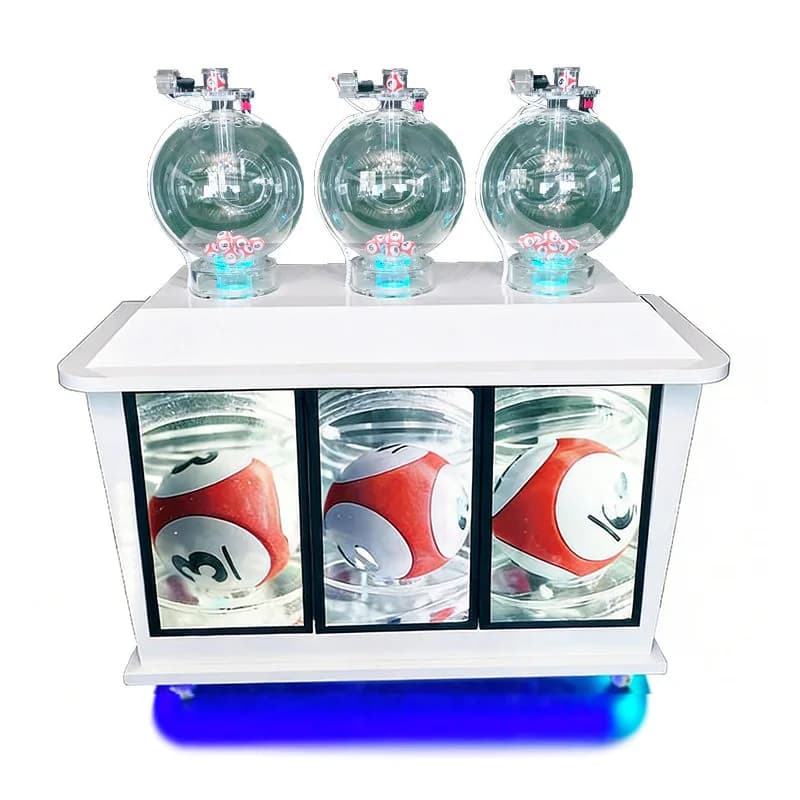
The 3D-V2 is a counter-style pick 3 lottery machine with screens, built for operators who run three-digit draw games in front of a live audience. Three transparent spherical mixing cylinders sit side by side on top of a white cabinet, three vertical number screens on the cabinet front show each drawn digit, and an external display mirrors the full result — for example 4-2-6 — so everyone in the room reads the outcome at the same moment. Every automatic function is governed by a microprocessor, and the cylinders can release balls individually or simultaneously.
How does the 3D-V2 mix and draw the three digits?
Each digit of a Pick 3 result is produced by its own dedicated mixing cylinder, so the three positions of the game never share a ball pool. Inside each transparent spherical chamber, the numbered balls are kept in constant motion during the mixing phase, which prevents any ball from settling in a predictable position before selection. When the mixing time set on the controller expires, the release mechanism mounted on top of that chamber lets a single ball through, and that ball's number becomes the digit for its position. Because the three chambers are mechanically independent, a fast mixing-and-selection cycle lets a game with many selections finish quickly and efficiently, and the drawn numbers return to the hall without any manual handling between draws.
How are the cylinders and ball release mechanisms built?
The three spherical chambers are fully transparent, which is a structural requirement, not a styling choice: players and auditors must be able to watch the balls move and see exactly when one ball leaves the chamber. On top of each sphere sits a mechanical ball-release head, the only moving interface between the ball pool and the draw result, and each chamber rests on an illuminated base that keeps the ball pool visible under stage or hall lighting. The balls themselves are solid, 4 cm in diameter, and printed with large black numbers in red, yellow and blue color sets, sized so a digit stays readable from across a room. The chamber spacing across the cabinet top keeps the three mechanisms physically separated, so a service action on one cylinder never disturbs the other two.
How do the per-digit screens and the external display work together?
The cabinet front carries three vertical number screens, one aligned under each mixing cylinder. When a cylinder releases a ball, the screen beneath it displays that digit, so the result builds up position by position in front of the audience — or appears all at once when the cylinders are run simultaneously. In parallel, an external display connected to the machine mirrors the complete three-digit result, for example 4-2-6, for players standing further away or watching from another part of the venue. This two-level presentation is the defining feature of the 3D-V2: the built-in screens document the draw process digit by digit, while the external screen broadcasts the final combination, so operators do not need a separate result board or a staff member calling out numbers.
What does the microprocessor control during a draw?
On the automatic version of the 3D-V2, every draw function is executed by the microprocessor rather than by manual switching. The two parameters an operator adjusts most often are the duration of the mixing time and the time interval between selections. Shortening the mixing time speeds up games that run many selections in a session; lengthening it gives the audience more time to watch the balls tumble before each digit drops. The interval setting controls the rhythm between the three cylinders — tight intervals produce a rapid three-digit reveal, while longer intervals build suspense for staged events. Because these parameters are set in the controller, the same machine can serve a quick continuous game format in the afternoon and a slower ceremony-style draw in the evening without any mechanical change.
How is the cabinet built, lit and moved?
The machine body is a white counter-style cabinet: the working surface at the top carries the three cylinders, the front face integrates the three vertical screens, and the lower section houses the electrical assembly and control hardware. A multi-color LED ambient light strip runs along the base, producing the blue and pink-purple glow visible in the product photos, which marks the machine as an active game unit on a dark floor. Caster wheels under the base let two people reposition the machine inside a venue without lifting equipment, which matters for operators who move the machine between a game room, a stage and a storage area. For daily care, the factory instruction is simple: never touch the machine with sharp tools, because they scratch the facing surfaces, and clean it only with a damp soft cloth — no special detergent is needed or recommended.
What customization and data options can Jisun build in?
The 3D-V2 is built to order around your game rules. Tell us how your Pick 3 format runs — ball count per cylinder, draw rhythm, single or simultaneous release — and the machine is configured to match before it leaves the factory. Dimensions are not fixed to a single catalog size; the cabinet is custom-built to your venue requirements. On the data side, RFID, data push and API functions can be added on request, so the machine can feed draw results into your own management or display system instead of operating as a standalone unit. Cabinet branding is equally flexible: logo artwork is designed and applied to your requirements, which lets operators run the machine under their own game brand. For a specification matched to your venue, send us your game format and floor space and we will configure a 3D-V2 quotation around it.
Where a Three-Cylinder Pick 3 Draw Machine Fits
Crating, Delivery and Warranty for the 3D-V2
The figures below follow common B2B export practice for arcade and amusement equipment. Final MOQ, schedule, freight term, and warranty coverage are confirmed in the quotation or proforma invoice for your order.
- MOQ
- 1 unit (sample order accepted)
- Confirmed for this product.
- Production Lead Time
- 25 days
- Estimated production time after order confirmation.
- Shipping
- EXW / FOB Guangzhou / CFR / CIF
- Available trade term for this product.
- Warranty
- 12 months
- Product warranty period confirmed for this model.
Operator Questions
FAQ: Running a Three-Cylinder Pick 3 Draw with Per-Digit Screens
Can the three cylinders draw at the same time or one by one?
Both modes are supported. Each of the three spherical cylinders is mechanically independent, so the machine can release the three Pick 3 digits simultaneously for a fast reveal, or draw them one by one with a set time interval between selections. The interval is a parameter of the microprocessor controller, so you can switch the rhythm between sessions without any mechanical modification.
How are the drawn digits shown to players and the audience?
On two levels. Three vertical number screens built into the cabinet front each display the digit released by the cylinder above them, so the result appears digit by digit as the draw runs. At the same time, an external display connected to the machine mirrors the complete three-digit result — for example 4-2-6 — for viewers further away. No separate result board or staff announcement is needed.
Which draw settings can the operator adjust on the 3D-V2's three cylinders?
On the automatic version, all draw functions are microprocessor-controlled. The two main adjustable parameters are the duration of the mixing time — how long the 4 cm balls tumble before a selection — and the time interval between selections. Short mixing times suit games with many selections per session; longer intervals create a slower, ceremony-style reveal for staged draw events.
Can the machine send results to our own management system?
Yes. RFID, data push and API functions can be added to the 3D-V2 on request. With these options fitted, the machine outputs draw results to your own management, ticketing or display infrastructure instead of operating as a closed standalone unit. Tell us which interface your system expects when you request a quote, and the machine will be configured accordingly at the factory.
How should I clean and maintain the 3D-V2's mixing cylinders and number screens?
The factory guidance is deliberately simple. Never use sharp tools on the machine, because they scratch the facing surfaces of the cabinet and the transparent chambers. For cleaning, wipe with a damp soft cloth only — no special detergent is required or recommended. The transparent spheres should stay clear so players can watch the balls mix, and the caster-mounted base lets you move the unit for cleaning access.
Can the machine size be customized for our venue?
Yes. The 3D-V2 is a custom-built machine, and its dimensions are set to your venue requirements rather than fixed to one catalog size. When you send an inquiry, provide your floor space, ceiling height and game format, and Jisun will configure the cabinet and cylinder layout to fit. Logo design on the cabinet is also handled to your branding requirements.
Amusement-only, no cash payout. Local compliance required; operator is responsible for local regulations.