Lottery Draw Machines
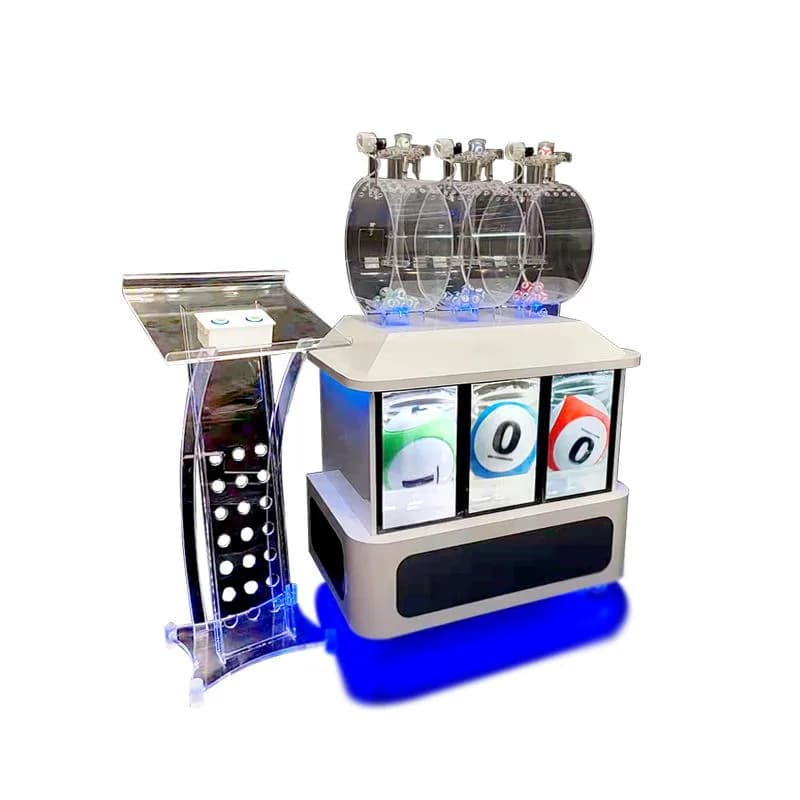
3D-V1 Pick 3 Lottery Machine with Control Console
Model: 3D-V1
- Three air-mix cylinders hold 10 balls (0-9) each for a true Pick 3 format
- Separate illuminated acrylic console stand places draw control with the presenter
- Each cylinder draws independently, or all three simultaneously for faster sessions
- Three front display windows keep every drawn digit ball visible to the audience
- Microprocessor sets mixing duration and the interval between selections
- Optional RFID, data push and API link the machine to draw management systems
- Multi-color LED base strip lights the machine in blue, green, red or yellow
3D-V1 Engineering Data
3D-V1 Pick 3 Machine: Structure and Electrical Specifications
RFID, API and Custom Setup Options for the 3D-V1
- RFID ball identification
- Data push of draw results to external systems
- API integration with your draw management software
- Draw program configured to your game rules (mixing time, selection intervals)
- Independent or simultaneous draw mode setup
- Cabinet dimensions adapted to your venue
Engineering-Led Overview
Inside the 3D-V1: Air-Mix Cylinders, Console and Controls
The 3D-V1 is a pick 3 lottery machine with console, built for operators who run hosted three-digit draws. Three transparent air-mix cylinders sit on top of a white-grey cabinet, each holding 10 balls numbered 0-9, and a separate illuminated acrylic console stand lets a presenter run the draw away from the machine body. Three front display windows show each drawn digit ball to the audience.
How Does the 3D-V1 Mix and Draw Three Digits by Air?
Each of the three cylinders on the 3D-V1 is an independent air-mix chamber. Compressed airflow is driven up through the chamber so the 10 balls inside circulate and tumble continuously, which removes any settling pattern before a ball is released. Because the balls are numbered 0-9, one cylinder produces exactly one decimal digit, and three cylinders together produce the full Pick 3 result. Each cylinder carries its own metal outlet and control mechanism on top, so the release action is handled chamber by chamber rather than through a shared gate. Once a ball is released it travels down into the corresponding front display window, where it stays visible to the audience for the rest of the session. After the result is confirmed, the drawn numbers can be returned to the machine without manual handling, so the next draw starts from a clean state. The fast mixing and selection cycle keeps sessions moving even when a game format calls for many repeated selections.
Why Three Separate Cylinders Instead of One Mixing Chamber?
A Pick 3 result is an ordered set of three digits, and drawing all three from a single chamber creates two practical problems: the same physical ball cannot occupy two positions, and the draw order is hard to present clearly on stage. The 3D-V1 avoids both by assigning one cylinder to each digit position. The hundreds, tens and units digits each come from their own chamber with their own ball set of 0-9, so repeated digits such as 3-3-7 occur naturally and every position is statistically independent of the others. The chamber layout also gives the operator two working modes. The three cylinders can be drawn individually, one digit at a time, which suits a presenter-led draw where each number is announced separately. Or all three cylinders can be drawn simultaneously, which suits high-frequency sessions where speed matters more than ceremony. Switching between these modes does not require any mechanical change to the machine.
What Does the Separate Console Stand Do During a Live Draw?
The 3D-V1 ships with a clear acrylic console stand that is physically separate from the machine cabinet. The stand is illuminated, with a column of round light dots embedded in the upright, and its angled top surface carries a white two-button control box. During a hosted draw the presenter stands at this console and triggers the mixing and release actions while facing the audience, instead of reaching over the machine itself. This layout matters for televised or staged draws: the machine stays in full view as a display object, with its three cylinders and three result windows unobstructed, while all operator interaction happens at the console a short distance away. The acrylic construction keeps the stand visually light on camera, and the built-in lighting ties it visually to the machine, whose base carries a multi-color LED strip that can glow blue, green, red or yellow to match the stage lighting of the venue.
How Are Draw Parameters Set on the Microprocessor Control?
On the automatic configuration of the 3D-V1, all draw functions are governed by an onboard microprocessor rather than fixed mechanical timing. The operator can adjust the two parameters that define the rhythm of a session: the duration of the mixing phase, which determines how long the balls circulate in the cylinders before a release is allowed, and the time interval between successive selections, which determines the pause between one digit and the next. This adjustability lets the same hardware serve very different formats. A ceremonial draw for a corporate event can run with long, visible mixing phases, while a rapid-fire game format can shorten both parameters to move through many selections quickly. An on-machine display screen shows each winning number as it is drawn, so the result is readable even for audience members who cannot see the display windows directly, and it gives the operator an electronic record reference alongside the physical balls.
Cabinet Construction, Lighting and Assembly Details
The main machine is a white-grey floor-standing cabinet. The three transparent cylinders mount side by side on the cabinet top, each with its own metal outlet mechanism, and below them the front face carries three display windows arranged to line up with the cylinders above, so the audience reads the result as a direct left-to-right number. A black horizontal panel sits beneath the windows, and an LED ambient strip runs along the base of the cabinet. The cabinet, cylinders and console are assembled and test-run at the factory before packing; machines are shipped in wooden export crates, with the console stand protected as a separate component. The transparent parts are acrylic, so day-to-day care is simple: wipe with a damp soft cloth, use no special detergent, and keep sharp tools away from the surfaces to avoid scratching the faces.
| Structural part | What it does |
|---|---|
| 3 air-mix cylinders | Each holds 10 balls (0-9) and mixes them by airflow |
| 3 metal outlet mechanisms | Release one ball per cylinder, independently or together |
| 3 front display windows | Present each drawn digit ball in audience view |
| Display screen | Shows each winning number electronically |
| Acrylic console stand | Holds the two-button control box for the presenter |
| LED base strip | Multi-color ambient lighting: blue, green, red, yellow |
Can the 3D-V1 Be Customized for Your Game Format?
Yes. The machine can be fitted with RFID ball identification, data push and API functions so draw results flow directly into your own management or display software; each function is quoted as a separate option. Beyond electronics, we configure the machine around your game: tell us your draw rules and we set the mixing and selection program accordingly, and the cabinet dimensions can be adapted to your venue. The 3D-V1 is used for tender and bidding draws, auction events, game rooms, lottery draw events and corporate or real-estate celebration draws. To discuss a configuration, send your game format and venue size through the Get a Quote form and we will reply with a build proposal.
Where the Three-Cylinder 3D-V1 Pick 3 Machine Runs Draws
Crating and Delivery for the 3D-V1 Machine and Console Stand
The figures below follow common B2B export practice for arcade and amusement equipment. Final MOQ, schedule, freight term, and warranty coverage are confirmed in the quotation or proforma invoice for your order.
- MOQ
- 1 unit (sample order accepted)
- Confirmed for this product.
- Production Lead Time
- 25 days
- Estimated production time after order confirmation.
- Shipping
- EXW / FOB Guangzhou / CFR / CIF
- Available trade term for this product.
- Warranty
- 12 months
- Product warranty period confirmed for this model.
Buyer Questions
3D-V1 Pick 3 Machine with Console: Operator FAQ
How many balls does each cylinder on the 3D-V1 hold?
Each of the three cylinders holds 10 balls numbered 0-9, giving 30 balls in total across the machine. One cylinder produces one decimal digit, so the three cylinders together draw a complete Pick 3 result such as 3-4-5. Every cylinder has its own metal outlet mechanism on top, and each drawn ball drops into its own front display window, so the audience reads the three digits left to right directly below the cylinders they came from.
Can the three digits be drawn one at a time or all at once?
Both modes are supported. The cylinders can be drawn independently, one digit after another, which suits a presenter-led session where each number is announced separately. They can also be drawn simultaneously, releasing all three digits in one action for faster sessions. The choice is made at the control level, not mechanically, so the same machine switches between a ceremonial slow draw and a rapid multi-selection format without any hardware change.
What is the separate console stand used for?
The console is a clear acrylic stand, shipped with the machine, that carries a white two-button control box on its angled top surface. It lets the presenter trigger the mixing and release actions while standing apart from the machine and facing the audience, which keeps the machine's cylinders and result windows unobstructed on stage or on camera. The stand column has round light dots embedded in it, so it reads as an illuminated lectern that visually matches the machine's LED base lighting.
Which draw parameters can the operator change on the 3D-V1 control console?
On the automatic configuration, all functions are microprocessor-controlled and two key parameters are adjustable: the mixing duration, which sets how long the balls circulate in the cylinders before release, and the time interval between successive selections, which sets the pause between digits. Long settings suit staged draws where the audience should watch the balls mix; short settings suit formats with many repeated selections. An on-machine display screen shows each winning number as it is drawn.
Can the 3D-V1 connect to our existing draw management software?
Yes. The machine can be equipped with optional RFID, data push and API functions. RFID identifies individual balls, while data push and API functions send draw results to external systems such as result boards, management software or broadcast graphics. Each function is a separate option with its own cost, so you only add what your operation needs. Tell us your system requirements in the inquiry and we will confirm the integration approach for your build.
How should the acrylic cylinders and console be cleaned?
The transparent cylinders and the console stand are acrylic, so routine care is simple: wipe the surfaces with a damp soft cloth, with no special detergent required. Do not use sharp or abrasive tools on any transparent face, because they scratch the acrylic and the scratches are permanent. The same care applies when handling the machine during installation. Keeping the cylinders clear matters operationally, since the audience watches the balls mix through the transparent walls during every draw.
Amusement-only, no cash payout. Local compliance required; operator is responsible for local regulations.