Lottery Draw Machines
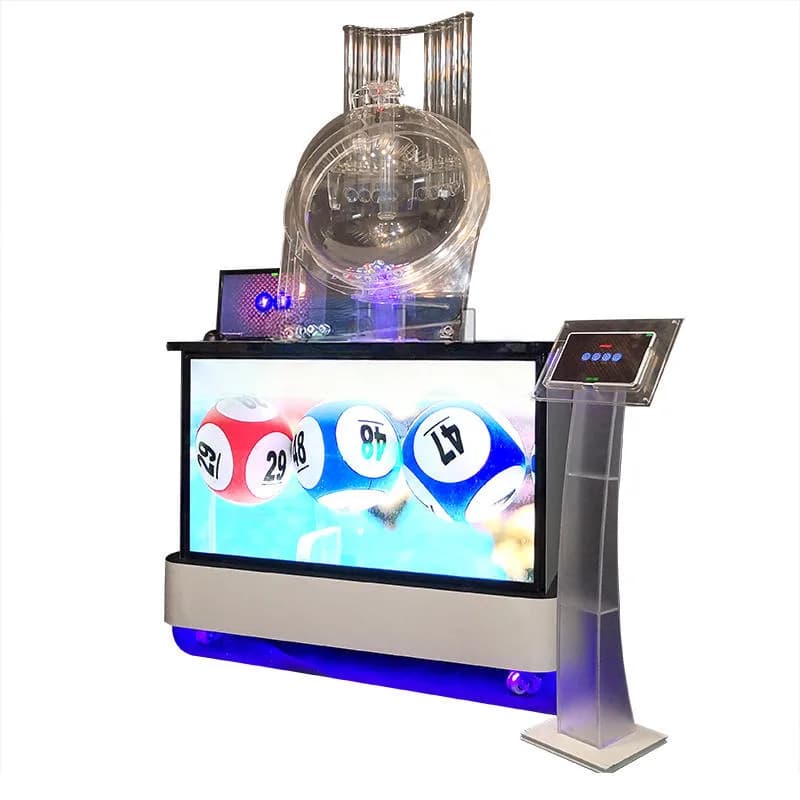
1D-6D Lottery Machine with TV and Separate Console
- Separate floor-standing console keeps the operator up to 50 m from the machine
- Large embedded LCD shows the drawn balls to the audience in real time
- Operator console carries its own screen and buttons for full draw control
- 50-ball transparent acrylic drum with air-blower mixing for 40 mm balls
- One machine runs 1D, 2D, 3D, 4D, 5D and 6D draw formats
- LED-lit base in blue or green reads well on stage and on camera
- 1900 mm high cabinet keeps the drum visible over a standing crowd
Remote-Control 50-Ball Lottery Draw Machine with TV - Operation Video
Watch the air-blown 50-ball lottery draw machine in action, mixing and drawing numbered balls while results show live on the built-in TV screen.
Venues Built for the Separate-Console Lottery Machine Layout
Machine Overview
Inside the 1D-6D Lottery Machine with TV and Separate Console
The 1D-6D Lottery Machine with TV and Separate Console is an air-blower drawing system that combines a 50-ball transparent drum, a large LCD screen embedded in the cabinet front, and a floor-standing operator console with its own display and buttons. It is built for lottery halls and TV productions that want the operator physically separated from the machine during every draw.
How does a draw run when the operator works from a separate console?
The drawing machine stands in front of the audience or camera while the operator runs the session from a transparent floor-standing console placed anywhere up to 50 m away. Fifty 40 mm solid numbered balls circulate inside the clear acrylic sphere under air-blower mixing, so every ball stays visibly in motion before the draw. When the operator triggers the draw from the console buttons, the selected balls are captured and the result appears at once on the large LCD screen built into the cabinet front, mirrored on the console's own small screen for the operator. Because all controls sit on the console, nobody needs to touch the machine during the session, which keeps the drawing area clear for spectators, presenters and cameras, and removes any question about interference at the drum.
Where does this console-separated layout work best?
The split layout earns its floor space anywhere the person controlling the draw should not stand next to the drum. Four typical installations below show how buyers position the machine, who operates it, and what to check on site.
Lottery halls running scheduled 1D to 6D draws
In a hall, the machine usually stands on a low stage or an open floor area facing the seating, with the console at a staff counter or a side control point — the 50 m link range covers even large rooms. A typical session runs like this: staff load and count the 50 balls before opening, the operator starts the air mixing from the console, then draws the digits one by one for the current 1D to 6D game while the results stay on the cabinet-front LCD until the next session. The 1900 mm overall height lifts the transparent sphere above a standing crowd, and the screen is readable from the seating rows. Check that the ceiling clears the drum and the vertical tubes above it with margin to spare.
TV studios and live broadcast productions
The transparent acrylic sphere and the moving balls read well on camera, and the large embedded LCD doubles as an on-set results display, so no extra graphics overlay is needed to show the drawn numbers to viewers. The console, with its own screen and buttons, sits off-camera at the production desk — up to 50 m of separation means it can even live in the control area while the machine is framed on set. A presenter stands beside the drum while the operator controls draw timing from the desk. Before booking the machine into a studio, check door widths and freight lifts against the 1280 mm × 700 mm footprint and 1900 mm height; the machine travels as one cabinet plus the separate console.
Shopping mall promotions and brand roadshows
In a mall atrium the machine works as a visible attraction: the LED-lit base (seen in blue and green on finished units) marks it out, and the crowd watches both the drum and the LCD. The operator console goes at the stage edge or behind a barrier, again anywhere within 50 m. A common flow is hourly draws — announce, mix, draw, display the numbers, reset. Plan the floor layout around the 1280 × 700 mm cabinet plus console position and queuing space, and route the console link so visitors cannot trip over it. The fully enclosed cabinet and remote console also mean staff never open the machine in front of the public.
Company celebrations, real estate launches and auction events
The factory's stated application list covers bidding events, auctions, game rooms and company or real estate celebrations — one-day events where the machine is the drawing centerpiece for raffles, unit-selection draws or deciding auction lot order. The console lets event staff run every draw from the registration table instead of standing at the machine. For temporary venues, confirm the access route before event day: a 1280 mm wide, 1900 mm high cabinet needs clear doors, lifts and turning space, and the console position must stay within the 50 m link range of the machine.
What should you check on site before the machine arrives?
Four checks prevent most installation problems. First, ceiling clearance: the cabinet is 1900 mm high with a spherical drum and, on some configurations, vertical transparent tubes above it, so allow headroom beyond the bare figure. Second, floor area: 1280 × 700 mm for the machine, plus the console position, plus audience sightlines to both the drum and the LCD. Third, the console link: plan where the operator desk stands and how the connection runs, up to the 50 m maximum. Fourth, electrical supply: confirm the power and plug specification for your country with the factory when you order. For upkeep, wipe the acrylic with a damp soft cloth only — no sharp tools and no special detergents, to avoid scratching the clear panels.
Can the machine be configured for your own draw format?
Yes. The factory sets the machine up according to your game: tell them your draw rules — from a single-digit 1D game up to a 6D format — and they configure the machine, ball set and drum count to match. Machine dimensions can also be customized to fit venues with different space limits, and the factory provides free machine design and pre-sales consultation as part of the process. The practical route is to send your game rules, a sketch of the room with the intended machine and console positions, and your display requirements; the engineering team then confirms a configuration before production.
How are delivery and long-term support handled?
Each unit ships in a plywood export crate, with the console packed for separate protection. The manufacturer has more than ten years of lottery machine R&D and production experience, and its game machines are CE certified. Buyers receive free professional technical support, free machine design with pre-sales consultation, and a free 36-month after-sales service period. To get a configuration and quotation for your venue, send your draw format and room layout through the inquiry form — the team will confirm the console placement, screen setup and crating plan for your order.
50-Ball Air-Blower Unit
Specifications of the 1D-6D Machine with TV and Separate Console
- Mixing Mode
- Air-blower
- Main Display
- Large LCD screen embedded in the cabinet front
- Ball Diameter
- 40 mm
- Drum Capacity
- 50 balls
- Overall Depth
- 700 mm
- Overall Width
- 1280 mm
- Overall Height
- 1900 mm
- Cabinet Material
- Acrylic and aluminum-plastic panel
- Operator Console
- Floor-standing transparent console with its own screen and control buttons
- Max Console-to-Machine Distance
- 50 m
Custom Builds for Your 1D-6D Draw Format and Room Layout
- Draw format configured to your game rules, from 1D up to 6D
- Ball set and drum count matched to your game before production
- Custom machine dimensions made to order for your venue
- Console placement planned to your room layout within the 50 m link range
- Free machine design and pre-sales consultation for custom builds
Crating, Delivery and 36-Month Support for Console Models
The figures below follow common B2B export practice for arcade and amusement equipment. Final MOQ, schedule, freight term, and warranty coverage are confirmed in the quotation or proforma invoice for your order.
- MOQ
- 1 unit (sample order accepted)
- Confirmed for this product.
- Production Lead Time
- 25 days
- Estimated production time after order confirmation.
- Shipping
- EXW / FOB Guangzhou / CFR / CIF
- Available trade term for this product.
- Warranty
- 36 months
- Product warranty period confirmed for this model.
Buyer Questions
FAQs on the TV Lottery Machine with Separate Operator Console
How far can the operator console be from the drawing machine?
The console can be installed up to 50 m from the machine, which is the factory-stated maximum distance between the operating platform and the unit. In practice this covers a control room behind a hall, a production desk off-camera in a TV studio, or a registration table at the far side of an event floor. When you inquire, include a simple room sketch with the intended machine and console positions so the factory can confirm the link routing for your layout.
What draw formats does this machine support?
It runs 1D, 2D, 3D, 4D, 5D and 6D number-draw formats on one machine. The drum holds 50 solid balls of 40 mm diameter, mixed by air blower, and drawn digits are shown on the large cabinet-front LCD. If your game uses different rules or ball counts, the factory configures the machine to your game before production — send your draw rules with the inquiry and they will confirm the setup.
How much space and ceiling height does the machine need?
The machine itself is 1900 mm high, 1280 mm wide and 700 mm deep. Plan ceiling clearance beyond 1900 mm, because the transparent spherical drum — and on some configurations vertical tubes — sits on top of the cabinet. On the floor, allow the 1280 × 700 mm footprint plus space for the separate console and clear audience sightlines to the drum and the LCD. For delivery, check that doors and lifts admit a 1280 mm wide, 1900 mm high cabinet.
What do the built-in TV screen and the console screen each show?
The large LCD embedded in the cabinet front is the audience-facing display: it shows the drawn numbered balls during and after the draw, so spectators or cameras can read results without approaching the machine. The floor-standing console has its own small screen plus control buttons, giving the operator a private view of the session and full draw control from up to 50 m away. This split keeps public display and operator control on two separate screens.
Can the machine be customized to our game and venue?
Yes. Customization is game-led: you tell the factory your draw rules and they set the machine up accordingly, including the draw format and ball set. Machine dimensions can also be made to order for venues with specific space limits, and free machine design plus pre-sales consultation is included. The fastest way is to send your game rules, a room sketch with machine and console positions, and any screen display requirements with your inquiry.
What warranty and after-sales support come with the machine?
The factory provides a free 36-month after-sales service period, together with free professional technical support from its dedicated team. The manufacturer has over ten years of experience in lottery machine research and production, and its game machines are CE certified. For maintenance, the guidance is simple: never touch the acrylic with sharp tools, and clean it with a damp soft cloth without special detergents to avoid scratching the transparent panels.
Amusement-only, no cash payout. Local compliance required; operator is responsible for local regulations.