How to Choose Redemption Machines for an Arcade
Choose commercial redemption games by balancing guest appeal, floor-space productivity, ticket-system fit, service needs, and supplier capability. This guide gives arcade and FEC buyers a practical comparison process.
AI assisted with the initial draft and structure. The published page is reviewed against Jisun source facts, product context and editorial requirements; the named reviewer is shown above when assigned.
Choose redemption machines by matching game format to audience, floor space, throughput, service needs, and expected revenue per square meter. The best FEC mix combines instantly understood play, competitive formats, and cabinets sized for their zones. Verify dimensions, voltage, ticket-system compatibility, spare-parts planning, and supplier customization before ordering.
What are the best redemption games for an arcade or FEC?
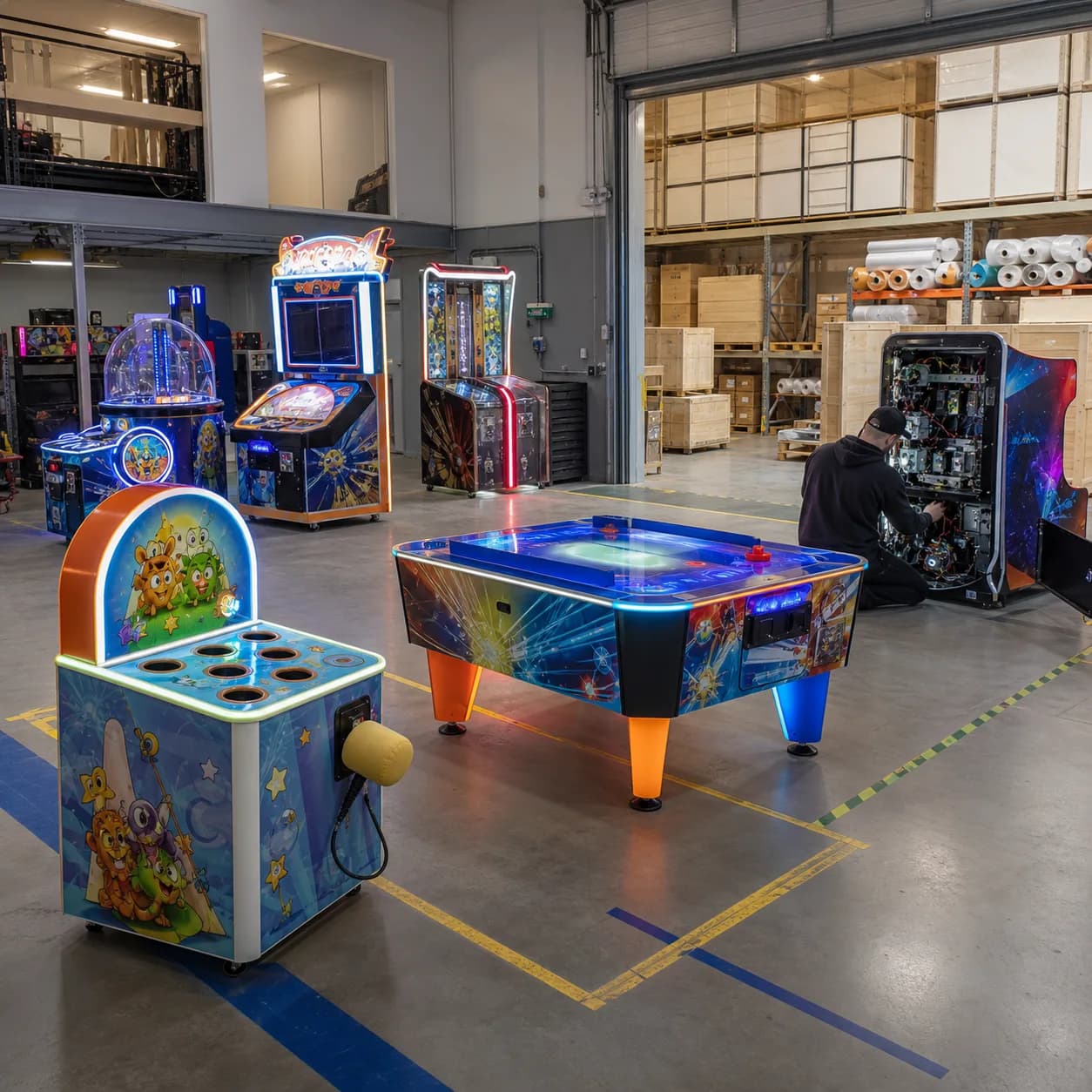
The best redemption games for family entertainment centers are easy to understand, quick to replay, visible from nearby walkways, and varied enough to prevent the floor from feeling repetitive. A redemption machine is a commercial arcade game that rewards successful play with physical tickets, electronic credits, or another prize-redeemable result. In our factory, we recommend building a balanced mix instead of buying many cabinets with the same interaction. Use reaction games for immediate family appeal, two-player games for social competition, and larger attraction pieces where visibility matters. Our classic whack-a-mole hammer gameplay is designed for repeat arcade use: guests see the targets, understand the challenge, and start quickly. Buyers comparing the Whack-a-Mole Machine with other formats should judge the role each game fills, not simply which cabinet looks biggest.
How should FEC buyers choose games for stronger ROI?
The best redemption machines for FEC ROI earn their space through repeat play, reliable guest comprehension, and a reward structure the operator can control. Start with revenue per occupied square meter, then test plays per hour, repeat-play rate, downtime, and average ticket cost per paid game. High gross revenue can still produce a weak result if the cabinet consumes premium floor space or the reward setting pushes redemption cost too high. Keep the calculation practical: revenue minus prize or ticket value, payment fees, labor, service, rent allocation, and electricity. We tell buyers to pilot different game formats and review actual operating data before expanding an order. Short, obvious gameplay can reduce guest hesitation, while head-to-head play can encourage another paid round. That combination often matters more than a flashy cabinet feature that guests don’t understand.
Which cabinet size fits each arcade floor zone?
Choose cabinet size from a measured floor plan, not a catalog photograph. Record the machine footprint, operating clearance, player position, service access, and the route from unloading point to final placement. Compact equipment can fill perimeter zones or smaller game clusters, while a larger cabinet needs enough open space to remain inviting during busy periods. One Jisun whack-a-mole format has a compact 131CM x 117CM x 66CM cabinet footprint. Our two-player interactive table uses a compact 76x121x85cm table footprint, giving buyers another physical format to compare. These dimensions should enter your layout drawing before you estimate capacity. Freight realities matter too: confirm doors, lifts, corners, and unloading arrangements before approving the order. A machine that fits the game floor can still fail the delivery route.
| Format example | Supplied dimensions | Planning use |
|---|---|---|
| Whack-a-mole cabinet | 131 × 117 × 66 cm | Compare against player and service clearances |
| Two-player interactive table | 76 × 121 × 85 cm | Reserve access around both player positions |
When does a two-player redemption game make sense?
A two-player game makes sense when the venue wants visible competition, shared play, and a reason for companions to participate together. Jisun’s two-player format supports head-to-head play, so it can serve a different purpose from a single-player reaction cabinet. Place competitive games where waiting guests can watch without obstructing active players. Then compare whether the game creates incremental paid sessions or merely divides demand that another cabinet would already capture. When buyers ask us about the best arcade redemption machines for a family entertainment center, we look for complementary roles: solo reaction, side-by-side competition, and one or more high-visibility attractions. The Fun Slap Interactive Table provides a concrete table-format reference. Evaluate it against your audience, floor plan, payment method, and intended reward system before deciding quantity.
How do you evaluate a redemption machine with a ticket system?
Confirm the complete reward path before placing a purchase order. A ticket system is the hardware and software chain that records a game result and issues physical tickets or electronic redemption credits. Ask whether the cabinet’s output matches your venue’s chosen system, how award values are configured, what happens after a communication fault, and how staff verify disputed credits. The best redemption games for an arcade give operators enough control to align rewards with game difficulty and prize economics. Don’t evaluate the game screen in isolation. Follow one play from payment through scoring, award issuance, balance storage, and redemption-counter settlement. If you plan to connect multiple suppliers’ machines, request a written compatibility check for every model. This avoids discovering during installation that a cabinet’s reward interface and the FEC’s central system require different hardware or configuration.
What specifications should buyers verify before ordering?
Use a model-by-model approval sheet. Commercial redemption games for a family entertainment center may look similar online but require different floor space, electrical preparation, reward interfaces, and delivery handling. In our factory, we ask buyers to confirm the destination market early because one cited Jisun format supports 110-220V power for international arcade projects. Voltage alone isn’t the full acceptance check; the order sheet should also identify frequency, plug, local electrical requirements, and the venue connection point. Keep commercial terms tied to the exact model and configuration. MOQ and production lead time should appear in the supplier’s written quotation rather than being assumed from another cabinet. The same applies to packaging and shipment quantities. Use the following sequence so purchasing, venue operations, and installation teams approve the same specification.
- Record cabinet dimensions, player clearance, service access, and the complete delivery route.
- Confirm destination voltage, frequency, plug, and venue connection requirements.
- Document payment input, scoring logic, and physical-ticket or electronic-credit compatibility.
- Specify cabinet graphics, branding files, language needs, and approval responsibilities.
- Obtain model-specific MOQ, lead time, packing, spare-parts, and shipment details in writing.
How do you choose a redemption arcade machine supplier?
Choose a supplier that can turn your operating brief into a controlled production specification. Ask for exact drawings, electrical details, gameplay configuration, branding scope, inspection checkpoints, packaging information, and after-sales contacts. OEM means producing equipment to a buyer’s specified brand or design requirements, while ODM includes supplier-led design development for the project. Jisun provides source-factory OEM/ODM support for cabinet graphics and branding, which helps wholesale buyers coordinate equipment with an FEC theme or regional rollout. Still, every change should be documented against the affected model. Compare sample approval, revision control, testing evidence, spare-parts identification, and communication speed—not just the opening quotation. Our interactive redemption machine manufacturer page introduces the broader product cluster, while the wholesale buyer guide supports order-level evaluation.
Planning a new arcade, FEC, or game-center expansion? Send us your floor plan, destination market, preferred gameplay mix, ticket-system requirements, and branding brief. We’ll help you compare suitable redemption machines and prepare a project-specific wholesale quote.
Frequently Asked Questions
- Should an FEC fill its redemption area with one proven game format?
- No. A stronger mix gives each cabinet a clear role, such as instantly understood reaction play, solo challenges, or head-to-head competition. Track real plays, repeat sessions, downtime, and occupied floor area before expanding any one format.
- How can head-to-head games improve a redemption floor mix?
- They let companions participate together and make active play visible to nearby guests. Jisun’s two-player format supports direct competition, so buyers can use it to complement single-player reaction games rather than duplicating the same experience.
- Which supplied dimensions can buyers use when planning compact redemption zones?
- The cited Jisun examples include a 131 × 117 × 66 cm whack-a-mole cabinet and a 76 × 121 × 85 cm two-player table. Add player space, maintenance access, and delivery-route clearance to those cabinet measurements.
- Why must ticket-system compatibility be approved for each machine model?
- The reward path includes scoring, award output, credit or ticket issuance, and redemption settlement. A written model-level check helps prevent interface or configuration conflicts when an FEC combines machines and a central ticket system.
- Which operating figures reveal whether a redemption machine deserves more floor space?
- Review revenue per occupied square meter, plays per hour, repeat-play rate, downtime, and average reward cost per paid game. Together, these figures show whether a cabinet’s sales compensate for its space and operating costs.
Related Buying Guides
How to Choose a Claw Machines Wholesale Supplier
A practical sourcing guide for buyers comparing claw machine factories, redemption equipment, cabinet footprints, international power options and OEM/ODM support.
Arcade Redemption Machines Wholesale Buyer Guide
A practical wholesale sourcing guide covering redemption gameplay, cabinet dimensions, international power requirements, venue planning, pricing, MOQ and OEM/ODM customization.
Commercial Arcade Game Machines for Sale
Jisun supplies commercial arcade game machines for wholesale buyers, including whack-a-mole, air hockey, shooting, and interactive redemption machines. We support OEM/ODM cabinet graphics, branding, voltage needs, and destination plug customization.