China Arcade Equipment Manufacturer with CE Certification
European arcade buyers need model-specific CE documentation backed by clear electrical, installation, and operating specifications. Here is how we approach that sourcing process at Jisun.
AI assisted with the initial draft and structure. The published page is reviewed against Jisun source facts, product context and editorial requirements; the named reviewer is shown above when assigned.
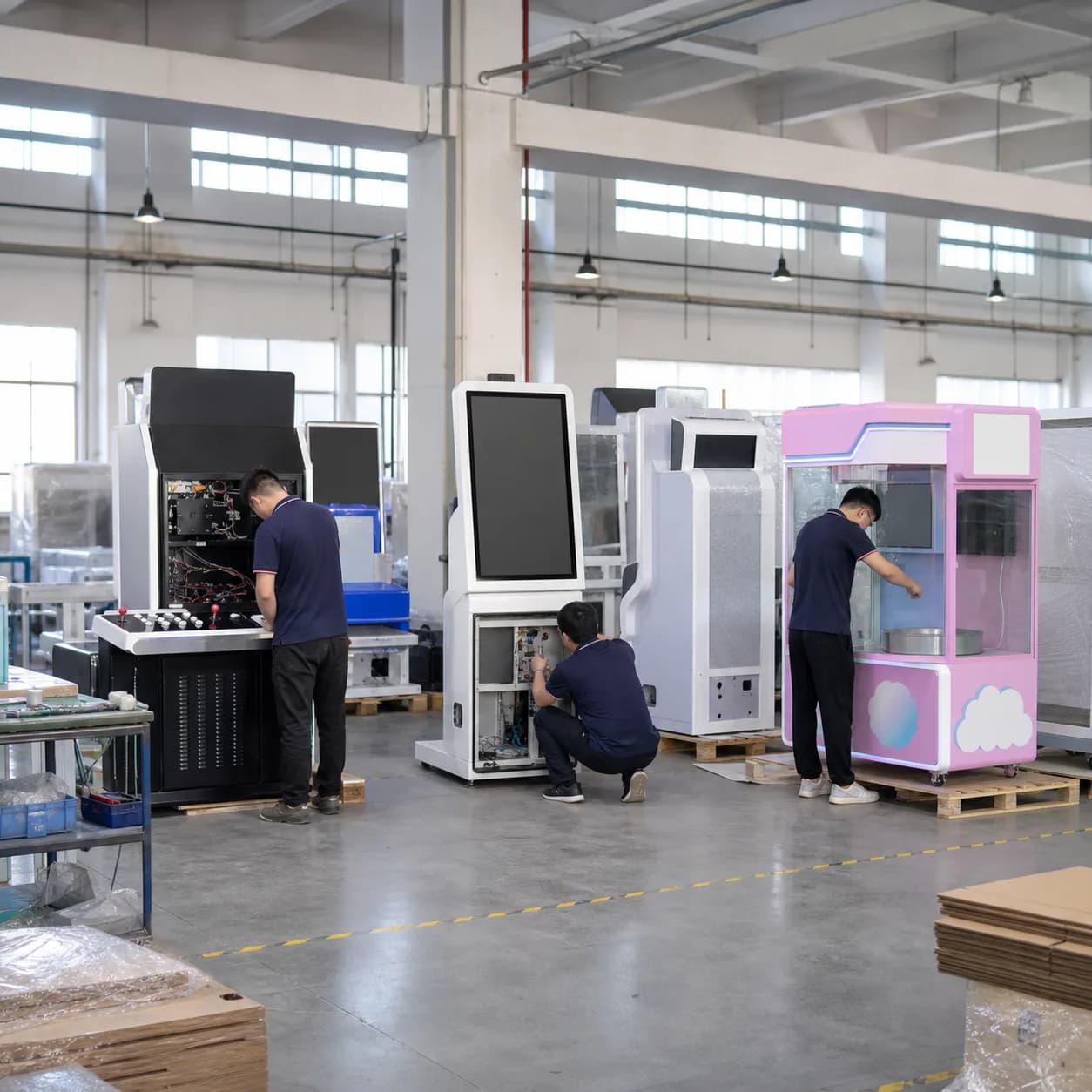
European buyers should choose a China arcade equipment manufacturer that can match model-specific CE documentation with the exact machine configuration, electrical setup, and destination market. In our factory, we treat CE review as a product-level task: the cabinet, voltage, user interface, installation data, and OEM/ODM changes must stay aligned.
How should buyers evaluate a China arcade equipment manufacturer with CE certification?
Start with the exact machine model, not a general supplier claim. CE marking is the manufacturer’s declaration that a product meets the EU requirements applicable to that product. Official EU guidance places responsibility for conformity assessment, technical documentation, the EU Declaration of Conformity, and CE marking on the manufacturer. When buyers ask us to act as a CE certified arcade machine manufacturer for Europe, we first define the cabinet and configuration being purchased. Buyers should then match the model designation on the quotation, rating information, documentation, and delivered machine. This matters when controls, payment hardware, power components, or branded OEM/ODM elements change. A photograph of a CE mark alone doesn’t establish that every configuration is covered. Ask which exact product the documents identify and retain the approved specification with your order records. See the official EU CE-marking guidance for the manufacturer’s responsibilities.
Which electrical details matter when ordering CE certified arcade machines for Europe?
Voltage and frequency must be checked against the individual model and its final installation site. Our cotton candy equipment uses 220V as its standard voltage, while 110V customization is available. Elsewhere in our self-service range, a listed configuration covers 110V–240V at 60Hz and uses an 80W power design. Those figures shouldn’t be combined into one universal rating. Europe-bound buyers must confirm the selected model’s complete nameplate specification, including frequency, before production. Wide voltage coverage alone doesn’t prove compatibility with a venue’s supply. We also ask buyers to plan the socket location and cable route around the approved floor position. It’s a small detail until a cabinet arrives. Then it becomes an electrician’s problem. The key electrical data should appear consistently in the purchase specification and supporting documentation.
| Equipment reference | Supplied electrical data | Buyer action |
|---|---|---|
| Cotton candy equipment | 220V standard; 110V customization available | Confirm the ordered voltage before production |
| Self-service equipment configuration | 80W; 110V–240V/60Hz | Match voltage and frequency to the destination site |
What operating specifications help European venues assess a cotton candy machine?
Guest flow, language support, and remote oversight deserve the same attention as electrical data. Our Magic Cotton Candy Machine uses a 21.5-inch touch screen for clear self-service operation and supports multiple languages for different venue markets. Four 2kg sugar canisters provide multiple flavor and pattern options, while one serving takes about 120 seconds. Operators can use that cycle time when estimating queues and deciding where the machine belongs, although real demand still depends on the venue. Remote backup management is available through a mobile app or web page, reducing the need to stand beside the machine for routine oversight. For a practical placement example, our guide to a cotton candy vending machine for a mall arcade connects these operating details with venue planning.
How do cabinet dimensions and construction affect installation planning?
Commercial installation starts with measured access routes and an accurate floor plan. One upright self-service configuration in our range has a 42×55×155cm footprint, weighs 53kg, and uses metal cabinet construction for commercial arcade environments. That combination supports stable floor placement in shopping malls, arcade centers, and family entertainment centers, but the route into the venue still needs checking. An FEC, or family entertainment center, is a venue that combines games and attractions for groups and families. Buyers should compare the cabinet dimensions with doorways, lifts, corners, and its final service position before shipping. Freight teams care about physical reality. A compact floor rectangle doesn’t guarantee easy handling through a narrow back-of-house corridor. We use the confirmed cabinet model as the basis for layout coordination rather than relying on a generic product-category measurement.
| Installation field | Listed specification | Planning relevance |
|---|---|---|
| Cabinet size | 42×55×155cm | Floor layout and access-route checks |
| Machine weight | 53kg | Handling and stable floor placement |
| Construction | Metal cabinet | Commercial arcade environment use |
| Suitable venues | Shopping malls, arcade centers, and FECs | Project and location screening |
How can buyers build a better Europe-bound equipment specification?
Build the order around models, documents, and venue conditions. In our factory, we begin with the intended location and equipment mix, then record the selected cabinet, electrical rating, operating language, dimensions, weight, and requested OEM/ODM details. This creates a cleaner reference for production and conformity-document review. Buyers planning a complete venue can start with our Vending & Amusement Equipment Manufacturer pillar page, then compare supporting equipment such as the Self-Service Coin Exchange Machine. Payment flow matters on a real arcade floor: the exchange point must suit the venue’s operating model rather than being added after cabinet placement is fixed. For broader planning, review what equipment is needed to open an arcade before finalizing the machine list.
- Identify every exact machine model and destination country.
- Confirm the model-specific CE documentation and configuration details.
- Match voltage and frequency to the installation site.
- Record cabinet dimensions, weight, language, and operating requirements.
- Review OEM/ODM changes against the documented product configuration.
Planning a Europe-bound arcade or self-service equipment order? Request a quote from Jisun with your destination market, venue type, required models, and customization brief so we can prepare a model-specific wholesale proposal.
Frequently Asked Questions
- Does a CE mark on one cabinet automatically cover every arcade model in an order?
- No. Buyers should match the model designation and final configuration to the relevant documentation. Different cabinets or modified configurations should not be treated as automatically covered by one product reference.
- Why is a 110V–240V rating not enough to approve a machine for a European site?
- Voltage is only part of the electrical specification. The listed wide-range configuration is rated at 60Hz, so buyers must also compare frequency and the full model nameplate data with the destination venue.
- How should OEM/ODM changes be handled during a Europe-bound order?
- Record each requested change against the exact cabinet model and review it with the documented configuration before production. Changes to electrical components, controls, payment hardware, or branded elements can affect the product record buyers rely on.
- Which operating data helps estimate cotton candy service capacity?
- The cited machine produces one serving in about 120 seconds. Its 21.5-inch touch screen supports self-service operation, while four 2kg sugar canisters provide several flavor or pattern choices.
- Which physical details should be recorded for the upright self-service configuration?
- Use its 42×55×155cm dimensions, 53kg weight, and metal cabinet construction when planning the floor position, delivery route, and handling requirements.
Related Buying Guides
Automatic Cotton Candy Vending Machine Manufacturer
Compare automatic cotton candy vending machines by serving cycle, sugar capacity, electrical configuration, cabinet size and remote operation. Jisun supplies commercial equipment for malls, arcades and family entertainment centers.
Cotton Candy Vending Machine for Mall Arcade
A cotton candy vending machine for mall arcade use helps operators add a self-service snack attraction without taking much floor space. Jisun supplies factory-built vending and amusement equipment for malls, arcades, and FEC projects.
What Equipment Is Needed to Open an Arcade?
Opening an arcade needs revenue games, payment and coin systems, prize support, and reliable venue-ready machines. We explain the equipment mix from a manufacturer’s view, including claw machines, cotton candy vending, and coin exchange equipment.